Dato’ Seri Anwar bin Ibrahim [Permatang Pauh]: minta Perdana Menteri menyatakan langkah-langkah berkesan bagi mengembalikan keyakinan awam terhadap imej negative Suruhanjaya Pencegahan Rasuah Malaysia, Polis Diraja Malaysia dan Jabatan Peguam Negara berikutan keraguan umum terhadap perilaku penyiasatan dan pendakwaan terpilih.
Timbalan Menteri di Jabatan Perdana Menteri [Datuk Liew Vui Keong]: Terima kasih. Tuan Yang di-Pertua, saya memohon izin Tuan Yang di-Pertua untuk menjawab serentak soalan daripada Yang Berhormat Permatang Pauh hari ini bersama-sama dengan soalan nombor 34 daripada Yang Berhormat Tawau pada hari ini juga yang menyentuh tentang penyiasatan dan pendakwaan terpilih melibatkan SPRM dan juga PDRM.
Siasatan yang dijalankan oleh Suruhanjaya Pencegahan Rasuah Malaysia (SPRM) dan Polis Diraja Malaysia (PDRM) dilaksanakan mengikut prosedur undang-undang dan peraturan yang telah ditetapkan. Penguatkuasaan undang-undang oleh kedua-dua agensi ini dibuat tanpa mengira latar belakang atau kedudukan individu yang disiasat mahupun fahaman politik mereka. Pegawai-pegawai SPRM dan PDRM sentiasa diingatkan untuk mengikuti lunas undang-undang dan mematuhi garis panduan yang berkuat kuasa dalam melaksanakan tanggungjawab yang diberikan.
Tuan Yang di-Pertua, tambahan pula mekanisme tanggungjawab yang diwujudkan semasa SPRM ditubuhkan jelas menunjukkan kesediaan suruhanjaya itu untuk berperanan secara bebas, telus dan profesional dalam menjalankan penyiasatan ke atas kes-kes rasuah. Saluran-saluran yang telah diwujudkan seperti Lembaga Penasihat Pencegahan Rasuah, Jawatankuasa Aduan atau Panel Penilaian Operasi itu wajar digunakan oleh pihak-pihak yang tidak berpuas hati terhadap tindakan dan perilaku siasatan SPRM, memandangkan ahli-ahlinya terdiri daripada kalangan orang awam dan masyarakat sivil yang berfungsi secara bebas di luar SPRM.
Berhubung dengan pendakwaan terpilih yang dibangkitkan oleh Yang Berhormat, adalah dimaklumkan bahawa pendakwaan sesuatu kes hanya akan dilakukan terhadap mana-mana orang tanpa mengambil kira kedudukannya. Sekiranya terdapat keterangan yang mencukupi ataupun sufficient evidence bagi mendapatkan sabitan bagi kes-kes yang dikendalikan oleh SPRM, semua kes yang diputuskan untuk tidak dituduh perlu dilaporkan kepada Panel Penilaian Operasi yang terdiri daripada individu profesional dalam bidang masing-masing serta bertindak secara bebas.
Untuk makluman Yang Berhormat, tangkapan yang telah pun diambil terhadap ahli-ahli parti politik daripada Januari hingga Ogos tahun ini. Bagi parti Barisan Nasional, tangkapan telah dibuat sebanyak 12 orang dan pertuduhan 7. Bagi pakatan pembangkang, tangkapan hanya seorang sahaja dan pertuduhan belum ada buat setakat ini.
Jadi, bagi pihak Jabatan Peguam Negara Tuan Yang di-Pertua, telah mengambil langkah-langkah dan pendekatan yang berkesan dalam mengendalikan pendakwaan seperti yang berikut;
Peguam Negara selaku pendakwa raya telah mengarahkan timbalan pendakwa raya supaya merujukkan semua kes berkepentingan awam kepada beliau sendiri untuk keputusan sama ada pendakwaan perlu dibuat atau sebaliknya;
Mengadakan perbincangan antara agensi penyiasatan dengan timbalan pendakwa raya sebaik sahaja kes berkepentingan awam dilaporkan bagi memastikan siasatan dijalankan secara menyeluruh;
Pendakwaan sesuatu kes hanya akan dilakukan sekiranya terdapat keterangan yang mencukupi bagi mendapatkan sabitan tanpa mengira kedudukan seseorang dan
Memberi latihan yang berterusan kepada timbalan pendakwa raya terhadap agensi-agensi penyiasatan dengan kerjasama agensi-agensi luar negara dan mengambil langkah melaporkan keputusan kes pergerakan kertas siasatan dan penjelasan berkenaan dengan kes-kes tertentu di laman web rasmi Jabatan Peguam Negara.
Tuan Yang di-Pertua, untuk menjawab soalan Yang Berhormat Tawau berhubung dengan Indeks Pencapaian Utama (KPI) SPRM dan PDRM sebagaimana yang diumumkan oleh Yang Amat Berhormat Perdana Menteri tadi, pelaksanaan National Key Result Areas (NKRA) yang meliputi KPI yang sama adalah merupakan salah satu usaha serius oleh kerajaan untuk mengurangkan jenayah dan memerangi rasuah. Inisiatif ini sedang dibincangkan secara mendalam di NKRA Lab yang sedang berjalan dan akan diumumkan oleh Yang Amat Berhormat Perdana Menteri tidak lama lagi. Pelaksanaan NKRA ini akan dipantau oleh Performance Management Delivery Unit ataupun Pemandu yang diketuai oleh dua orang Menteri bagi meningkatkan lagi keyakinan orang awam terhadap usaha kerajaan dalam mengurangkan jenayah dan memerangi rasuah. Sekian, terima kasih Tuan Yang di-Pertua.
Datuk Seri Anwar Ibrahim [Permatang Pauh]: Terima kasih Tuan Yang di-Pertua. Pertama, soal imej negatif SPRM. Ini kerana setelah peruntukan baru yang kuat dalam undangundang dan akta, tindakan itu masih dianggap terlalu lemah dan kadar peningkatan rasuah di negara terus meningkat. Kita mengandaikan dengan adanya SPRM, kadar dengan sendiri sekurang-kurangnya akan menurun, tetapi sebaliknya meningkat.
Keduanya, Lembaga Panel Jawatankuasa Khas SPRM itu tidak bersidang. Jadi, maknanya Parlimen diminta mengadakan peruntukan dengan Panel Lembaga Jawatankuasa Khas tetapi tidak bersidang. Maknanya, tidak ada seriousness di pihak SPRM dan kerajaan untuk memastikan pengawasan dan pengawalan terutama tatkala imej SPRM itu tertekan.
Kemudian Polis Diraja Malaysia, ada suruhanjaya sebelumnya, ada usul-usul dan cadangan yang spesifik yang dikemukakan. Kadar jenayah terus meningkat. Maknanya, dengan segala jaminan diberikan itu tidak memberi keyakinan kepada rakyat kerana kejadian jenayah tidak kenal sama ada wakil itu daripada Pakatan Rakyat atau Barisan Nasional kerana pimpinan Barisan Nasional dan rumah-rumah mereka juga diserang dan keluarga mereka juga diragut.
Ketiga, penjelasan Yang Berhormat mengenai pendakwaan terpilih Jabatan Peguam Negara itu tidak menjurus kepada pertuduhan dan kecaman yang dibuat terutama oleh badan guaman bahawa dalam beberapa kes besar yang kita punyai maklumat yang cukup jelas tidak berlaku sebarang tindakan. Jadi, saya pohon penjelasan bagi ketiga-tiga isu yang saya bangkitkan.
Datuk Liew Vui Keong: Terima kasih Tuan Yang di-Pertua. Dengan hormatnya kepada Yang Berhormat Permatang Pauh, imej negatif ini berbaur seperti satu pertuduhan yang tidak elok, tidak berasas. Ini adalah satu persepsi yang tidak benar. Seperti yang telah saya nyatakan tadi bahawa tindakan memang telah pun diambil terhadap orang-orang yang telah pun terlibat dalam satu kes rasuah dan telah pun dilaporkan kepada pihak SPRM. Statistik telah pun menunjukkan bahawa hanya seorang sahaja daripada pakatan pembangkang telah pun ditangkap dan tidak ada pertuduhan yang telah pun diambil terhadap beliau.
Mengenai dengan pertuduhan terhadap PDRM yang tidak mengadakan siasatan terhadap pegawai yang menjalankan kerja yang tidak baik. Yang Berhormat dari Permatang Pauh sedia maklum bahawa wujudnya satu Suruhanjaya Integrasi Agensi Penguat kuasa di mana orang ramai yang tidak berpuas hati dengan siasatan yang telah pun diambil oleh pihak-pihak pegawai boleh membawa aduan kepada Suruhanjaya Integrasi Agensi Penguat kuasa yang dikenali sebagai SIAP ini.
Mengenai uduhan mengatakan ada prosecution terpilih ataupun selective prosecution, ini tidaklah benar dan juga Yang Berhormat juga membangkit mengenai ada menerima maklumat yang kukuh terhadap seseorang ahli politik yang terkenal ataupun orang besar tetapi Yang Berhormat sedia maklum, maklumat itu kadangkala tidak mencukupi. Kadangkala maklumat itu dihantar melalui surat layang ataupun disebarkan dalam newspaper but there is no sufficient evidence to charge the person in court dan kadangkala juga apabila seseorang telah pun dituduh di dalam mahkamah, kalah dan menang sesuatu kes itu seperti Tuan Yang di-Pertua sedia maklum, terpulang kepada keterangan yang akan diberi melalui saksi dan kadangkala pula saksi turn hostile dan memberi keterangan yang lain dan ini boleh menyebabkan sesuatu kes kalah di dalam mahkamah. Sekian, terima kasih.
Soalan – soalan Lisan:
Tuan Yang di-Pertua: Yang Berhormat Sri Gading.
Datuk Haji Mohamad bin Haji Aziz [Sri Gading]: Assalamualaikum warahmatullaahi
wabarakaatuh, salam sejahtera, selamat pagi, Selamat Hari Raya Aidilfitri, Selamat Deepavali dan selamat segala-galanya. Tuan Yang di-Pertua, apa yang diutarakan oleh Yang Berhormat Permatang Pauh, inilah usaha-usaha yang dilakukan oleh parti pembangkang. Di luar terus berusaha bawa masuk di dalam Dewan untuk mewujudkan persepsi negatif kepada kerajaan.
Kerajaan kita ialah kerajaan yang baik. Agensi-agensi kerajaan kita menjalankan tugas
dengan penuh profesional, adil, telus tetapi perkara-perkara yang baik oleh agensi-agensi ini sengaja diberikan imej yang buruk yang berkaitan dengan fitnah, putar belit fakta, pembohongan agar rakyat dalam negara ini terpengaruh.
Beberapa ahli: Soalan, soalan.
Datuk Haji Mohamad bin Haji Aziz [Sri Gading]: Ya, soalan akan sampai. Ini ialah mukadimah. Jadi, pandangan-pandangan buruk ini, sangkaan-sangkaan buruk yang daripada acuman. Betul bahasa itu? Acuman ini bahasa Johor. Apa itu dalam bahasa… Maknanya fitnah, yang dibuat oleh parti pembangkang ini. Agensi-agensi kita yang berjasa ini, yang telus ini saya
berharap Yang Berhormat Timbalan Menteri, kita pertingkatkan daya usaha kita. Lawan, jangan putus asa, jangan patah hati, lawan! Kerana sebenarnya apa yang dilaksanakan oleh agensi – agensi kita ini sangat baik dan sebenarnya bukan semua rakyat beranggapan buruk kepada agensi-agensi ini, kita juga menghargai mereka menjalankan tugas dan berjasa umpamanya Polis Diraja.
Betapa berjasa Polis Diraja tetapi jasa yang begini mulia untuk kepentingan politik,
sengaja dinafikan dan saya harap Yang Berhormat Timbalan Menteri jawab secara politik sikit.
You lurus sangatlah. Jadi itu, supaya ditingkatkan profesional jabatan-jabatan ini supaya dapat menafikan atau menidakkan apa yang cuba dijalankan oleh parti pembangkang untuk mewujudkan persepsi buruk kepada agensi-agensi kita yang berjasa. Terima kasih.
Tuan Yang di-Pertua: Terima kasih. Yang Berhormat Menteri, sebelum Yang Berhormat Menteri menjawab. Saya nampak ramai Ahli Yang Berhormat yang ambil kesempatan daripada kesabaran saya kali ini. Inikan sesi soal jawab. Terima kasih Yang Berhormat Sri Gading. Lain kali tanya.
Datuk Haji Mohamad bin Haji Aziz [Sri Gading]: Minta maaf Tuan Yang di-Pertua.
Saya rasa itu soalan. Kalau itu Tuan Yang di-Pertua anggap bukan soalan, saya minta maaflah, saya minta maaf.
Tuan Yang di-Pertua: [Ketawa] Sila Yang Berhormat Menteri, sila.
Datuk Liew Vui Keong: Tuan Yang di-Pertua, saya berterima kasih kepada Yang Berhormat Sri Gading dan saya juga setuju dengan pandangan beliau bahawa pihak pembangkang ini memang sentiasa memberi satu persepsi yang tidak benar mengenai sesuatu kes tetapi saya yakin bahawa rakyat boleh lihat dengan jelas permainan-permainan pembangkang dalam perkara yang tertentu. Jadi, saya tidak dapat menafikan lagi bahawa pegawai-pegawai yang terlibat dalam agensi-agensi SPRM dan juga PDRM telah pun menjalankan kerja mereka dengan profesionalisme dan juga telah pun memberi the best that they can give. Kadangkala mungkin ada sedikit kelemahan tetapi itu tidak menjadi satu masalah kerana kita adalah manusia. Kadangkala kita buat juga kesilapan yang sedikit sebanyak. Terima Kasih.
Tuesday, 20 October 2009

Monday, 19 October 2009
Respon DSAI terhadap Laporan Goldstone-Isu Palestin
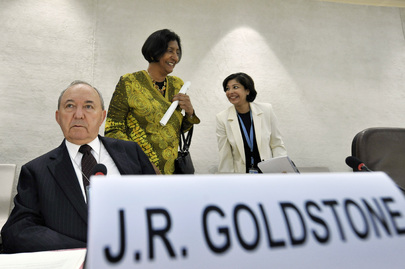
Rakan-rakan,
Berikut adalah adalah respons DSAI terhadap Laporan Goldstone:
Saya menyambut baik keputusan Majlis Hak Asasi Pertubuhan Bangsa-Bangsa Bersatu(PBB) yang mengiktiraf serta menyokong laporan Goldstone. Laporan yang disediakan oleh Richard Goldstone, mantan hakim dari Afrika Selatan bersama tiga lagi rakan beliau mendakwa berlakunya jenayah perang di Gaza, samada ianya dilakukan tentera serta kerajaan Israel ataupun dari pihak Hamas sendiri.
Laporan tersebut juga menyarankan agar Majlis Keselamatan membenarkan Mahkamah Antarabangsa(International Court of Justice)mengendalikan kes tersebut sekiranya pentadbiran Israel dan Hamas gagal menunjukkan iltizam serta kesungguhan di dalam mengenalpasti serta menghukum dalang jenayah perang di Gaza.
Sekiranya saranan ini diterima, pastinya dapat mengembalikan keyakinan masyarakat Muslim terhadap kewibawaan Majlis Keselamatan dan Pertubuhan Bangsa-Bangsa Bersatu yang kelihatannya acapkali gagal mendapatkan keadilan buat rakyat Palestin serta orang awam lainnya.
Saya juga berpendapat ini adalah salah satu peluang terbaik bagi menggerakkan satu permuafakatan antarabangsa untuk memperkukuhkan peranan Mahkamah Antarabangsa sebagai salah satu forum sejagat yang disegani serta dihormati.
ANWAR IBRAHIM
Sent via BlackBerry from Maxis
The Role of the Opposition in a Liberal Democracy

Speech by Anwar Ibrahim at the 12th Dudley Senanayake Memorial Lecture in Sri Lanka on 16th October, 2009
Ladies and Gentlemen,
It is indeed a great honour for me to be here this evening on the occasion of the 12th Dudley Senanayake Memorial Lecture. At the same time, I stand before you humbled by the task at hand. So, let me begin by first paying tribute to the memory of Premier Dudley Senanayake. In this regard, I think I can do no better than to laud his political ideals, ideals which still resonate with us, indeed with anyone who believes in freedom and democracy.
May I be as bold as to consider Dudley a Liberal Social Democrat, that is, more ‘Liberal’ than ‘Social.’ Nevertheless, there is no question that he was a de facto social democrat in as much as he espoused the principles of social justice and put them into practice. That would include affirmative action for the poor and the marginalized and promoting land ownership and housing for the needy. His economics heralded an era of transformation and his phenomenal contribution to agriculture is legendary. As for his predominantly liberal bent in politics, that would be reflected in our discourse this evening.
Ladies and Gentlemen,
The subject at hand may appear to some as having been flogged to death in as much as the landscape of liberal democracy is considered to be well traversed and the role of the opposition in such a system is self-evident.
Be that as it may, at the risk of being regarded as trying to reinvent the wheel, let me attempt to map out the province of liberal democracy and reiterate the role of the opposition in such a democracy. Let me begin with the doctrine that regards three central values as being foundational for a liberal democracy, and these are liberty, social pluralism and political constitutionalism. These values as we know are also central to liberalism itself but in the context of the discourse on democracy, our concern lies more with fundamental freedoms and the practice of constitutional government.
From Dicey we have the traditional conception of constitutionalism, which places the rule of law as being pivotal. According to him, “...the rule of law is as valuable a principle today as it has ever been. For it means that the courts can see to it that powers of officials, and official bodies of persons entrusted with government, are not exceeded and are not abused, and that the rights of citizens are determined in accordance with the law enacted and unenacted.”1
That would appear to be much less a definition than an indictment against executive abuse. By most accounts, the rule of law stipulates that government in all its actions is bound by rules fixed and announced beforehand. This would make it possible to foresee with fair certainty how the authority will use its coercive powers in given circumstances, and to plan one’s individual affairs on the basis of this knowledge.2 That is why the rider by Dicey is so central because the coercive powers referred to must be based on laws that meet the criterion of justness.
In other words, the rule of law requires the application of moral standards to legislative output. And this is because every individual possesses rights founded on justice which are inviolable. The positivity of law is not sufficient to establish its lawfulness. If laws are unjust then the rule of law itself is in jeopardy.3
The rule of law therefore means the exercise of publicly justifiable power. Whether or not it is justifiable, that is the question the opposition must ask and answer. Herein lies a pivotal role of the opposition in a liberal democracy which is to be the voice of public reason and ensure that the “exercise of public political power is fully proper” and it can only be so if and “when it is exercised in accordance with a constitution the principles and ideals of which are endorsed by common human reason”. 4
Preventive detention laws are a classic instance of the exercise of political power not in accordance with constitutional principles. They offend against human dignity and violate our fundamental rights. Yet such laws and such powers continue to be used arbitrarily even in liberal democracies such as the United Kingdom and the United States. The constitutional principles endorsed by human reason to safeguard our liberties are then violated with impunity by the powers that be. The use of such oppressive laws for whatever reason, let alone for the purpose of silencing political dissent, makes a mockery of the institution of liberal democracy. Clearly, it is incumbent on the opposition to challenge the use of such powers and to work relentlessly to have such laws abolished. In this regard, as the leader of the Opposition in the Parliament of Malaysia, I daresay that we are doing precisely that by campaigning for the abolition of the Internal Security Act.
In a nutshell therefore, the rule of law is the use of law to curb the abuse of law-making power. Upon this principle, power and authority are therefore predicated. It is a powerful weapon, both in legal and political argument, which can be employed judicially in the interpretation of constitutional principles so as to check excesses of the legislative and executive arms of government. Of course, the principle does not warrant that every trivial issue be accorded the process of being litigated all the way to the highest appellate court. Even the administration of justice is subject to the law of diminishing returns.
And that leads us to the position of the judiciary in a democracy. Without a doubt what comes to mind in an instant is the paramount importance of not mixing justice with politics, that is to say, the judiciary must remain independent. Under no circumstances should it be under the control or influence of the Legislature, let alone the Executive. There is a saying that when the law is subjugated to the chicanery of politics, that is, where the judges are subservient to the political masters, the administration of justice becomes farcical and perverse. We have seen what happened in Pakistan not too long ago. We see it happening in sham democracies masquerading as liberal democracies. And of course we see it being played out ad nauseam from where I come.
The opposition must therefore play the role of ensuring the separation of these powers. It is their duty to see the existence of a transparent court system and a process of accountability. No doubt, this is easier said than done. This is because in reality leaders of the opposition are the very people who will be the victims of the use of judicial high-handedness. They will be the first to be prosecuted for political reasons and they will be condemned even before the trials begin.
Instead of being the ultimate guardians of our liberty from executive tyranny, the judiciary is then transformed into principals in the destruction of the very process it was entrusted to protect. Indeed, the undermining of judicial independence by political interference has negative repercussions not only on society at large but on the nation as a whole. Very often the inability to assert independence seems to be inversely proportional to the degree of integrity.
Therefore there is no overstating the role of the opposition in reminding judges of the legitimate expectations of the people as to their competency, dedication and impartiality. In resolving disputes between the people and the government, judges must act impartially. They administer justice, according to law, not according to the dictates of political masters. The rule of law means citizens can enjoy the fruits of liberty and other freedoms without being molested by the arbitrary use of political power. Police officers may not stop and search individuals just so that they may prevent them from attending rallies organized by an opposition party. If they do so, the people can expect the courts to invoke the rule of law to strike down such acts. The rule of law therefore will be seen in proportion to the effectiveness of the judiciary’s deliberations against executive power.
Another crucial criterion for constitutional government is that the discretion of law enforcement agencies must not be allowed to pervert the cause of justice.5 The office of the Public Prosecutor, the police and the anti-corruption agency, all these bodies, play essential roles in the preservation of the rule of law, failing which they are easily used to pervert the law. As absolute power corrupts absolutely, the arrogance of power left unchecked renders these agencies absolutely impermeable to public opinion and criticism. Once again, the role of the opposition as the conscience of the people in this regard is of paramount importance if democracy is to mean anything.
The very root of this problem goes to the question of accountability. We have seen how civilisations collapse from within as a result of corruption and moral decadence, and a disintegration of the institutions of accountability.6 Thomas Jefferson time and again warned against the abuse of unlimited powers by elected despots and foretold that there would come a time “when corruption in this, as in the country from which we derive our origin, will have seized the heads of government, and be spread by them through the body of the people; when they will purchase the voices of the people, and make them pay the price.”7 In our time these same sentiments were expressed with greater vigour and tenacity by the great freedom fighters, from Simon Bolivar to Sun Yat Sen, and from Nehru, from Dudley and from Mandela.
This links us back to our earlier postulation about liberal democracy and that is that political liberty is the area within which a man can act unobstructed by others. However, we must not forget that at the heart of this political liberalism lies the need for a social contract that enables such liberty. Such a contract, needless to say, must be rooted in a deal that legitimises power and holds accountable all those who exercise it. In this regard, the opposition must demand transparency in all government actions and dealings, leave no stone unturned in its quest for a fair and free media and constantly guard against the rise of despotism and tyranny. The latter as we know go hand in hand with abuse of power and corruption, that being the scourge of most developing countries and emerging economies even without the Corruption Index telling us so.
Certainly there are no simple answers to fighting corruption but the role of the opposition in pushing for transparency and freedom of information laws would certainly be indispensible if we are to make any progress in this regard. Corruption and poverty which engenders great disparities of income distribution must be seen holistically. Here I am again reminded of Dudley’s achievement in being among the first of the Asian leaders to focus on poverty eradication, which today still remains low in the order of priorities. By giving more attention to the agricultural sector and making available greater access to financial resources, as Dudley did, economic growth will get a major boost.
Liberal democracy is all well and good on paper but where hungry mouths cry out to be fed, our discourse will crystallise only into mere historical accounts of intellectual kite-flying and self-serving proclamations of pious platitudes.
That is why talk of a liberal democracy is meaningless without the state institutionalising social safety net programs such as social security or social insurance. As one of the central values of such a democracy as I had stated earlier, social pluralism must warrant that the government of the day take a holistic approach to integrate all aspects of life within a just and equitable system.
In this regard, apart from fighting poverty and redressing other social inequities, we should never lose sight of the importance of supporting strong families, education, and protecting the environment. The paramount aim must be the attainment of a system which allows for a more equitable distribution of wealth, without which it is indeed a mockery to speak of freedom and democracy, whatever hardcore libertarians may tell us.
Thank you.
Subscribe to:
Posts (Atom)
